Sunday, April 22, 2012

Eastern Shore Search Continues...

In the glitter, sometimes the water plays tricks on you.  Shapes and colors seem to appear then disappear in the blink of an eye.  It's almost like you want it so bad that your mind thinks it's there for a split second.  But when you finally, and actually, see that big red drum, it's unmistakable.

Unfortunately, the water clarity has been terrible lately and conditions have been tough.  I got out on my birthday for 6 hours and despite good reports from Ric Burnley and Kevin earlier in the week, I got the skunk.  My next excursion came 5 days later on the 20th.  After meeting Kevin, Lee, Shante and Damien at the launch, I was hoping for one of those crazy epic days.  But visibility was still minimal so trolling became the name of the game.  My 6" paddle tail was first to get a hit.


I knew fairly quickly after the first few seconds into the fight that it wasn't the big red I had come for.

Not that I'm complaining about a 40" striper.


Lee got the next striper at 43".  Damien was next up but the fish spit the hook early in the fight.  Lee came up with one more after that measuring around 33".


We met a few familiar faces and after a while without a hook up, took a break on an exposed shoal.
From left to right: Chuck Wrenn, Kevin, Shante, Lee Damien, Wayne Bradby, and Mo Todd. 
Shante found a cool little butterfly ray in a few inches of water.
After the ray got to deeper water that concluded the action for that day.  I ended up being the last to leave...  after spending nearly 12 hours on the water, still craving that bull ride.

The next morning, I rolled up to the launch to find Matt Anderson getting ready to pursue the same target so we joined forces.


Clear blue morning quickly changed to navigation testing fog.  

We ended with the skunk.

But the search will continue...

Monday, April 9, 2012

Easter Sunday Bull Ridin'

We waited anxiously.  More than a few phone calls exchanged theories on moon cycles, water temps, past seasons, weather windows, family commitments and of course the unforgiving work schedule.  By the time I got my stars lined up, Kayak Kevin and Jay Brooks had already clocked in a couple days earlier in the week and both had a notch on their belt to show for it.


My turn.


Kevin was waiting for me when I pulled up to the launch and as I got things ready, he quickly "branded" my kayak.  Holes were drilled, rivets got popped and before I knew it, I had one of his big DVD quality cameras attached to my bow.   I couldn't help but feel like it was part of a gang initiation :) I'm totally in!


Yeah, I know.  I'm a dork.  Anyway, we searched all around the Eastern Shore.  The channels, the shoals, the flats, they all came up empty.  5 hours passed quickly and as the wind grew bothersome, the sun also neared the horizon.  The last segment of the well calculated route had us near a drop off so we anchored up on the incoming tide.  I threw out two carolina rigged whole crabs; one on a big conventional reel and the other on a big spinning set up.  Normally I don't use my spinning rod for chunking bait, but I really wanted to double my chances.  Not too long after, the loop I put in the line-clip of my spinning reel gets pulled out and my 50lb braid is flying off my spool.  I close the bail and hold on tight.

After a few exhilarating runs coupled with the tell-tale headshakes, I released the anchor and quickly found myself on a bull red drawn sleigh ride with a nice sunset backdrop.


The 43"er is a welcome start to the red drum season.  The cherry on top is that it was the first big fish I tagged for the Virginia Game Fish Tagging Program.  

Kevin wasn't able to hook up but was happy none the less that I got on the board.  I'm sure he'll be out there as soon as weather and work allow.  Best of luck to him and whoever else decides to venture out in search of that infamous bullride. 


Thursday, April 5, 2012

RVA Stripers

It definitely seems like all the local migrations are happening earlier this year. 
The warm water temps are expediting the process and I, like most fishermen, am not complaining.  The magic of this time of year is more than welcome as many of the popular sport fishing species enter our local waters and get our juices flowing.

Reports of bluefish, puppy drum, flounder, speckled trout, and stripers pepper the local forums.  Togs are also readily available, but remember the closed season starts on April 16th this year.  A few regulations have changed for some of the species, so check out this site if you're not up to date.

The local rivers are also experiencing peak spring populations of anadromous species.  Yesterday, I had the opportunity to paddle out on the James River after work.  Making my first paddle strokes a mere 5 minutes from home was also a warm welcome.  Richmond, VA (RVA) boasts a great venue to take in this special time of year.  Near the I-95 bridge, the hickory shad action was on fire from the first cast at 7pm until I decided to scoot down river around 7:45.  I was hooking up on almost every cast.  If I let my orange and green shad fly sink near the bottom, the white perch were all over it.  After keeping a couple of each for bait, I drifted down and set up two fish finder rigs just above a good size hole.  The little catfish up to 28"were incessant, but every once in a while, I'd hook up a 26"-28"striper.


I was hoping for either a big bertha kitty or a striper that was bigger than "schoolie" size.  It wasn't long and my wish was granted in the form a 38" clicker-squealing heifer.

Various striper lures should work well over the next couple of weeks, including topwater poppers near the fall line rocks. 

 If I don't find myself looking for other highly anticipated saltwater species, I'll be back on the river chasing RVA kitties n stripers.  Hope you get out to your favorite spring fishing destination soon.

Tuesday, March 20, 2012

And So It Begins...

I watch the water temps like my 3 year old watches Curious George, with pure delight.  Staring at the graph of steady upper 40's to lower 50's translates to actively feeding togs swimming in the deep of my mind.  The time is now and I know it.  Only thing is, my calendar is consumed by work.  As reports start to trickle in, the shackles of my office feel heavy while my tog rod gently weeps.

With the year's maiden paddle to the first island of the CBBT finally scheduled for Saturday, weekend just couldn't come soon enough.  The promise of hungry togs and hard thumping drag pulls came to fruition using fiddler crabs for bait.  The morning was beautiful with light winds and I met with Josh Williams of MKF out on the prime kayak-toggin waters.  I kept telling him how much "I love this ---" every time I set the hook.

19" Tautog


Football fat 20.5"er

All fish were released
The wind picked up dramatically around mid-day and made things very challenging.  But I stayed persistent and ended the day with a dozen fish ranging from 15" to 20.5".  Clocking 10 physically demanding hours on the water seems to go by so much faster and maybe even easier than 10 hours in the office chair.  Although I admit, I'm a little sore since I remained relatively stagnant throughout the winter.

But that didn't keep me from spending a couple of hours on the river the following day.  I knew I wouldn't have any time during the week to get out on the water, so after some quality family time on Sunday, I got out for a little shad fishing.


I ended with about 15 or so hickory shad in the 2.5 hours.

Spring is here, and so it beings...
Good times.

Tuesday, March 6, 2012

Pics and Links from Shad Seminar

Here are a few pictures, links and tips from the Shad Fishing the James River seminar I presented at Appomattox River Company (3/6/12)

There's a saying... when the dogwoods are blooming in Richmond, it's time to go shad fishing.  Usually mid-March to early May with primetime usually being mid-April, shad fishing can be a blast on ultra light or fly tackle.  Shad spoons a foot or so behind a swivel and 1/4 ounce egg sinker can be effective, as well as shad darts, too.  But my personal preference is to use a 6wt. flyrod with 250 grain sinking tip flyline and various shad flies.  

Hickory shad will be there in huge numbers, but included in the mix are a few species that you can not keep to take home or use for bait.  


Source: Google Images

It is illegal to have American Shad in your possession.  The way to tell the difference is see if the fish has an underbite.  


Source:  Google Images
Hickory shad (ok to keep) have a large underbite that sticks way out past their upper lip.  American shad have lower jaws that tuck neatly into their upper lip.  

Blueback herring and Alewives look a lot like American shad, just smaller and their jaw tucks into their upper lip too.  It is now illegal to have either Blueback Herring or Alewives in your possession as well.  


The James River is tidal up to the fall line (14th street bridge).  The water will flow one way near Richmond, but the water will rise and fall with the tide.  My preference is for the incoming tide, but when the fish are thick, it doesn't seem to matter.  Here is the tide chart for the James River near Richmond.  James River Tides (at Richmond)

More important than the tide is the amount of water flowing.  If the cubic feet of discharge per second gets above 10,000 it becomes very difficult to get the lure or fly down to the required depth.   I usually don't bother going if it's above 12,000 cubic feet per second.  

Here is the link for James River Discharge Flow

and another for the river level predictions

Anncarrow's Landing is the main boat launch area.  Link.

There is also a canoe and kayak launch right off 14th Street, on the north side of the river, immediately south of the flood wall.  It's a small area, with big steps to get to the water. 

My buddy Josh Dolin put together this nice video with some of his tips. 

Monday, February 13, 2012

Buckets & Chains


Last weekend, I guided a friend to his personal best blue catfish. This weekend, I decided to play a little role reversal and called local legend, Forrest Short.  Chain Pickerel remained unchecked on the proverbial list and Forrest's invitation to try his spots stood too long.  The impending cold front, 12 hours away, added a sense of urgency but also a touch of optimism.

I usually do well shortly before a strong cold snap, so I had reason to be excited.  New dad, Justin Mayer and I followed Forrest to the lake he grew up fishing on, with high hopes.  But unfortunately, after four hours, even with signs of promise, we were facing the dreaded skunk.  Shortly before Justin had to get back to his newly acquired parental responsibilities, Forrest found a massive school of 6"-10" crappie in less than two feet of water.


Our attempts at getting them to bite were futile and we ended up snagging a few as our lures grazed their backs.


We got off the water and after Forrest shared some great fishing stories about that lake, Justin took off. Phase two was implemented and I found myself following Forrest to another lake in Yorktown. Within a few minutes of launching, he was showing me how it was done.


I absorbed the knowledge he was generously sharing and it didn't take me long before I got into an altercation with an aggressive pickerel of my own.

Giddy after my chain pickerel devirginization, I adamantly expressed my sincerest gratitude, appreciation and admiration toward my guide.  I always enjoy locating fish on my own, but it was still very sweet to catch a new specie with the help of a friend.  Thank you again, Forrest.


Over the next 4.5 hours, we worked our crankbaits in 4-8 feet of stained water and continued to have ourselves an excellent time.  Well over 20 fish were landed between us with several largemouth bass in the mix.


One of the highlights for the day included a chubby 21" bucketmouth that went a hair over 6.5lbs on my VAC certified scales.  It ties a personal best I set over 7 years ago.

The other highlight was a feisty, acrobatic, and very pretty 23" chain pickerel


I also met fellow Hook1 prostaffer, Marty Mood and a relative newcomer to the area from Wisconsin, Richie Bekolay.  They were off to a late start but quickly got into the fish.  Richie also had a really nice 21.25" bucket (pictures on his blog).

I stuck around a little later than Forrest, but just before I thought about leaving, I got a call.  Apparently the cold front was closer than we thought.  Forrest called to make sure we were on our way in because "it was lookin' like armageddon".  As I was hanging up, it started raining.  Then the wind machine went to full blast.  Within a couple minutes of paddling, we were being pelted by frozen rain, and a few minutes after that our kayaks had a layer of snow on them.  Luckily we weren't too far from where we launched.  I tried to get footage and photos of the madness, but moisture on the lenses made the shots unrecognizable.  As we begged our fingers to finish strapping the kayaks, big fat snowflakes caked our cars.  Then thunder clapped just above our heads.  All three of us looked at each other, then laughed in disbelief.  It quickly went from nice light winds to full on thunder snowstorm insanity.

What a day?!?! 

I got to fish with an angler who I have great respect for... I tried two new places... I tied a personal best bucketmouth that was just an inch short of citation... not only did I catch the new species I was after but lots of them... and one of those was just an inch shy of citation too... and at the end, I actually enjoyed what felt like a joke from mother nature... 

it was as if she was saying...

Thursday, February 9, 2012

Kayak Rigging for Photos and Video

By no means, would I call this a definitive guide, but perhaps some personal preferences that I have acquired over time.  I'm sure they will evolve as fresh ideas emerge and innovative new products serve the needs of this ever changing sport.  But for now, I'd like to share the set up I used to shoot footage over the past two years along with some new items that I've acquired.  I will use scenes from my last video, Addiction: Kayak Fishing, to refer to some of the angles I'll be talking about.  Although it was a lot of work putting it together, I found it very rewarding to look back, relive and share those cherished moments on the water.

A little background info...  The cameras I used were the Olympus Tough 8010, GoPro Hero standard definition, and GoPro Hero HD.  The Olympus is my point and shoot photo camera as well as a decent 720p video camera with sound.  It has little to no wide angle effect and a short zoom.  It's not the best camera out there for shooting video, but it gets the job done for now.  I retired the standard definition GoPro recently and upgraded to the HD Hero2.  GoPro no longer carries the standard definition cameras anymore, and I found the quality to be quite inferior to the HD.  But I still used it anyway because I wanted as many angles as I can.  The Hero HD is a great camera and most of the crisp clean shots in the video were taken by it.  I look forward to testing out my new HD Hero2 as I hear it's even better.

The first thing I'd like to mention is that putting the camera mounts in places you can reach is very important.  Being able to turn them off and on is definitely a good thing.  I understanding that some cameras come with a remote and GoPro is coming out with a remote system as well, but it's still a good idea to be able to access them.  You will have to change out batteries, switch modes, etc.  at some point.

With that being said, the mounts I have toward the front of the kayak are as follows:

A.  I bolted the helmet strap attachment that came with my GoPro to the Sonar Shield on my OceanKayak Trident.  The scene that starts at 1:30 is the view you get from that mounting point.  It's very flat to the deck, which I think is a cool view.  You can raise the Sonar Shield while using a depth finder and have the camera a slightly higher angle as well.  Unfortunately, in the video,  I was using the old standard definition GoPro, so you will notice the lower video quality.

B.  YakAttack Mighty Mount attaches to the hull using 4 bolts, washers and nuts.  A T-bolt slides into the slot and screws into the bottom of the PanFish Portrait (also show in right of picture).  The wave crashing over the bow, the spade fight scene that starts at 0:51, along with many more clips were shot from that angle using the Hero HD.

C.  Another Mighty Mount was mounted toward the front of the hatch to create a little more distance and a more straight on view.  Although cropped in, the first sheepshead fight at the beginning of the video was shot from this mount.  It was a cloudy/rainy day, so the lighting wasn't so great, even with the Hero HD.  I hear the Hero2 does a better job in low light conditions.

D & E.  YakAttack recently came out with the Gear Trac which comes in 4" increments up to 16".  I attached two 8" tracks with the stainless steel thread forming screws that came with it.  That means you don't have to reach behind and use bolts.  Just line up the trac, use the provided drill bit for pilot holes and drive in the thread forming screws.  The versatility of the Gear Trac is really quite amazing.  As you can see in the picture, I have the Panfish Portrait attached to the trac, but it can also be used with any RAM ball accessory, various rod holders and can serve many other functions.  For more info check out this video.  I don't have any shots taken from these angles, but I plan on using them extensively in the coming season.

For the rear of the kayak, I like having the camera up a little higher than most, so I attached the YakAttack Panfish to my crate using Mighty Mount screwed in each corner.


Scenes from behind were all shot from one of the two mounts.  The tog hook ups at 2:21 and 2:53 along with the tunnel at 2:35 and the splash at 3:16 are prime examples.


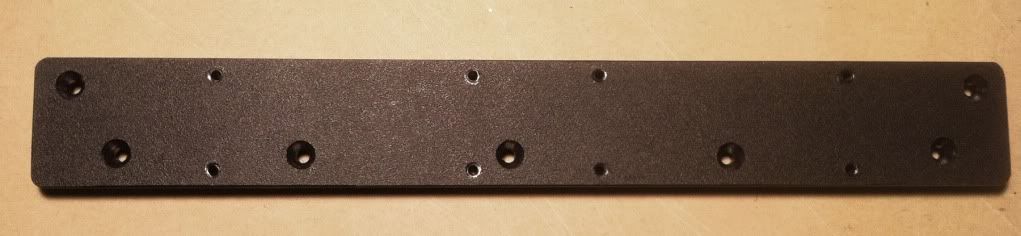
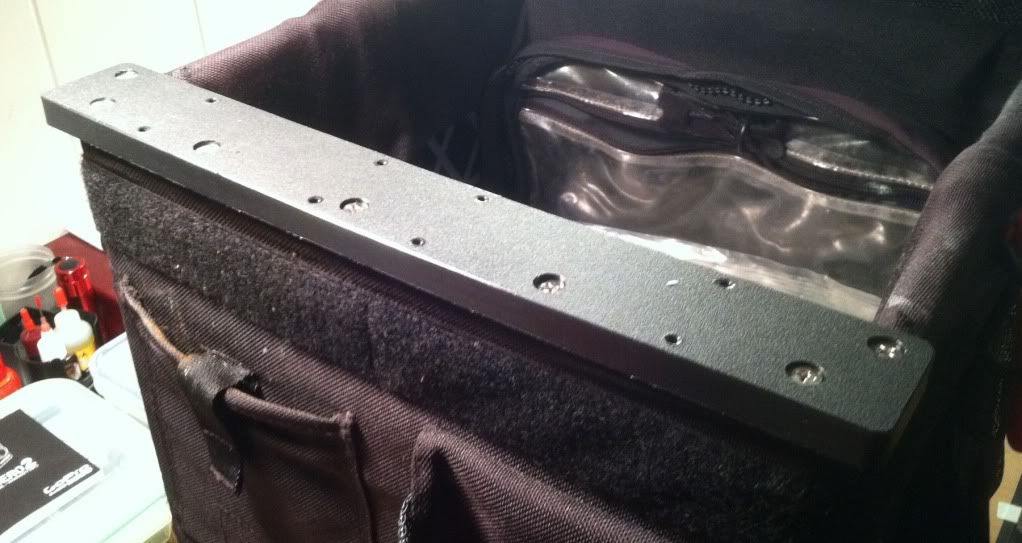
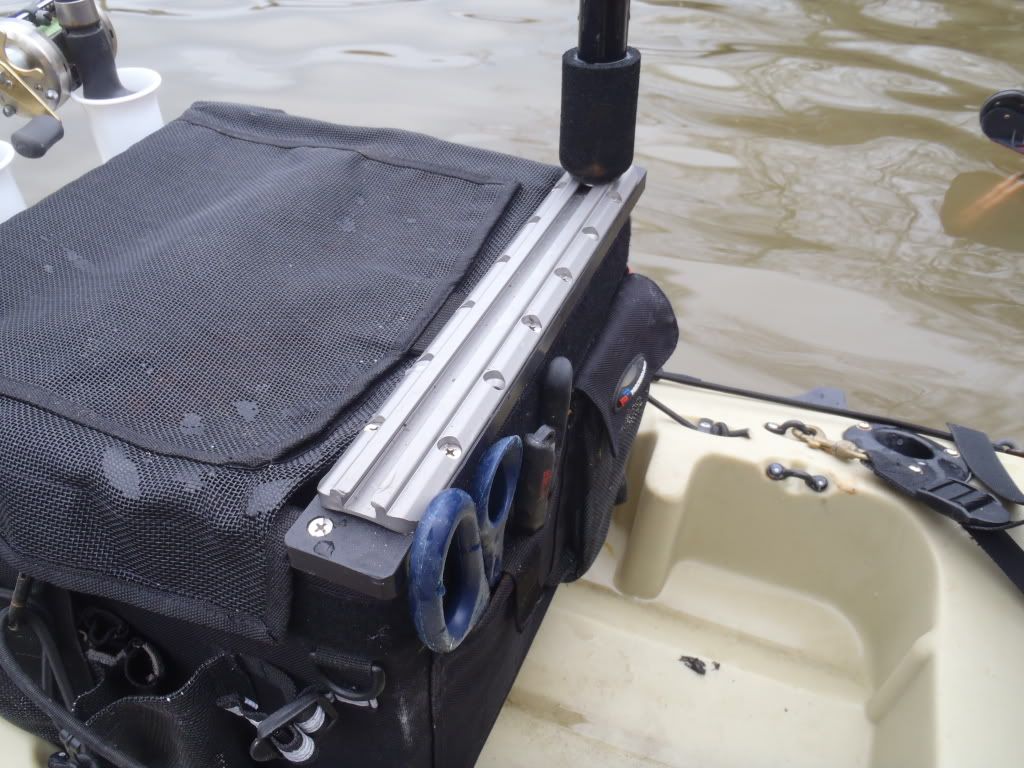
As I eluded to earlier, some of my preferences have already started changing.  With the introduction of the Gear Trac, I can use the entire length of the crate and not just the corners.  I was planning on using a piece of a cheap cutting board to use as a surface for the Gear trac to attach.  But being the problem solver that he is, Luther Cifers, owner of YakAttack, created a piece of plastic to fit just right.  I doubt he's going to go full production with the piece, but if you think this set up is right for you, you can probably make a similar one with a cheap cutting board.
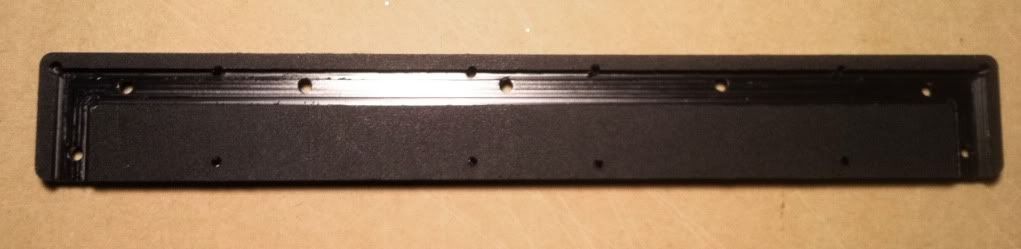
Bottom
Top
Attached to edge of crate
12" Gear Trac attached on top

The Panfish and Panfish Portrait slide in and out of the Gear Trac very smoothly.  Loosening and tightening the T-bolt is quick and easy.  Also, both the Panfish and it's smaller counterpart have a friction plate in the middle so the top portion can rotate while the bottom stays firmly attached to the mounting point.  It's a great feature that is really the namesake of the products, since you can "pan" the view.

Also, as I mentioned before, the Gear Trac offers many options for mounting, and I believe that the crate is a great elevated platform to take advantage of those options.   From the Screwball and various RAM products, to the new Dogbone for extra versatility, the possibilities are endless.  Check out YakAttack's site for the full scoop on all their innovative products. 


However, with all that being said, I still feel the need to utilize an apparatus I created a few years ago.  I told Luther about it and he understands my affinity for it.

My extending mono-pod has come in handy on countless occasions and I rarely get on the water without it.  If you haven't noticed throughout the video already, I almost always have it sitting in the flush mount rod holder behind me.

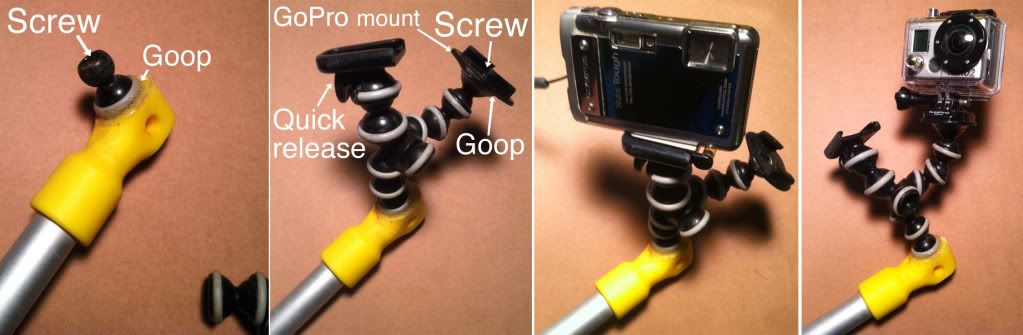
It's essentially just a retractable aluminum pole with Gorilla pod parts on the end.  I took a telescoping mini paddle and cut off the paddle blades and wrapped that end with electric tape.  I also cut off the excess parts of the handle.  The ball legs of the Gorilla pod pop off with a certain amount of force.  I screwed the ball onto where the handle of the paddle used to be, then popped the rest of the adjustable leg back on.  I made sure to get the Gorilla pod that had the quick release attachment so I can easily separate the camera and operate it manually (zoom).  Then I also took one of the many GoPro mounts that came with the camera and attached it to the third leg of the Gorilla Pod.  All hardware is self-tapping stainless steel and Goop was applied to the joining pieces.


Unlike many other products, I can change the angle of the camera with just one hand.  The Gorilla pod parts stay stiff enough to hold the camera in place, but I can also quickly and easily adjust the angle, rotate or reposition without putting down my rod.  Although I don't recommend making it a habit, I have bumped and scraped it on bridge pilings many times, and much to my satisfaction, it has held up great. 

Like I said earlier, the mono-pod stays in the flush mount rod holder behind me most of the time.  There's a groove at the bottom of the rodholder and the flap that remains after cutting off the paddle blades fits right in.  That keeps the mono-pod from spinning in the holder.  A lot of over shoulder scenes where you hear me talking, including the Red Drum fight starting at 1:06 was shot using the mono-pod and Olympus Tough 8010.

When I want to snap a picture of myself with a photo worthy fish I place the mono-pod in a Scotty rod holder in front of me and set the timer.  The electrical tape adds just enough thickness so it doesn't slip out of the rod holder.  For smaller fish, I can keep the mono-pod short and for larger fish, I can send the camera farther away by extending the tube.

While shooting video, the mono-pod has the advantage of being very mobile, since it's not attached to anything.  You can quickly take it out of the rod holder and bring the camera to the subject instead of always trying to bring the subject to the camera.  This is especially handy when filming your fishing buddy with his catch (1:27).  Also, all the underwater scenes in the video were captured using the mono-pod.  Being able to extend it from 22" to 42", not only allows you to get the camera deep under water, but you can also capture footage from a higher vantage points(1:53).  And since most small cameras have little to no zoom capability, having the few extra feet can help you get those close up shots.

Also, to creating some unique perspectives, I can put it in a Scotty or RAM rod holder behind me to capture some wide side view footage.  If I angle the rod holder down, I can also get continuous underwater footage.  All the while, at any time, I can still reach behind, undo the latch on the rod holder and pull the mono-pod and camera out with one hand if I need to.

All in all, the Panfish and Panfish portrait are the stationary mounts that I rely on for consistent footage.  For everything else, I enjoy using my mono-pod and every once in a while I'll use the GoPro headstrap.


Many of you probably think that most of the things in this long post is overkill, but I really enjoy seeing other people's videos that show many different angles and creative views.  So I try to put out what I myself like to see.  I hope you all found something useful in this post and I look forward to seeing some of your great kayak fishing action in the near future.